A common mistake in Murfreesboro is treating the deep alluvial clays of the Stones River floodplain like the stiff limestone residuum found on the city's higher ridges. When a contractor places shallow footings on six feet of soft fat clay expecting the same bearing capacity they got two blocks away, the result is differential settlement that cracks walls within the first year. Stone column design solves this mismatch. By installing compacted gravel columns through the weak zone, the composite ground mass gains stiffness and drainage, reducing total settlement by 40 to 60 percent compared to untreated soil. Before layout begins, we cross-check stratigraphy with test pit logs to confirm the depth of the compressible layer, and run SPT drilling to capture N-values every 2.5 feet through the zone that will receive columns.
The column transfers stress to the surrounding soil through lateral bulging, so the design lives or dies by the undrained shear strength of the confining clay.
Scope of work
A four-story medical office building off Medical Center Parkway sat on eight feet of soft alluvial silt overlying weathered limestone. The structural engineer needed 4,000 psf allowable bearing pressure, but the raw soil gave less than half. The solution was a grid of 30-inch-diameter stone columns on six-foot centers, extending through the silt and bearing on the rock surface. The design followed FHWA NHI-16-027 procedures for unit cell analysis, computing the area replacement ratio and stress concentration factor to verify that the composite ground would meet the settlement criterion under dead plus live loads. During construction, we confirmed column continuity by profiling the backfill volume per lift against the theoretical volume, detecting any necking before it became a defect. The site achieved the target modulus after two weeks of pore-pressure dissipation, verified by post-installation CPT soundings between columns.
Key design checks that govern the layout include bulging failure in the upper two column diameters, punching into a firm bearing stratum, and overall block settlement under the loaded area. In Murfreesboro's variable geology, we also evaluate the effect of shallow rock on column stress distribution — a condition that can concentrate load if the treatment depth is less than four column diameters.
Area-specific notes
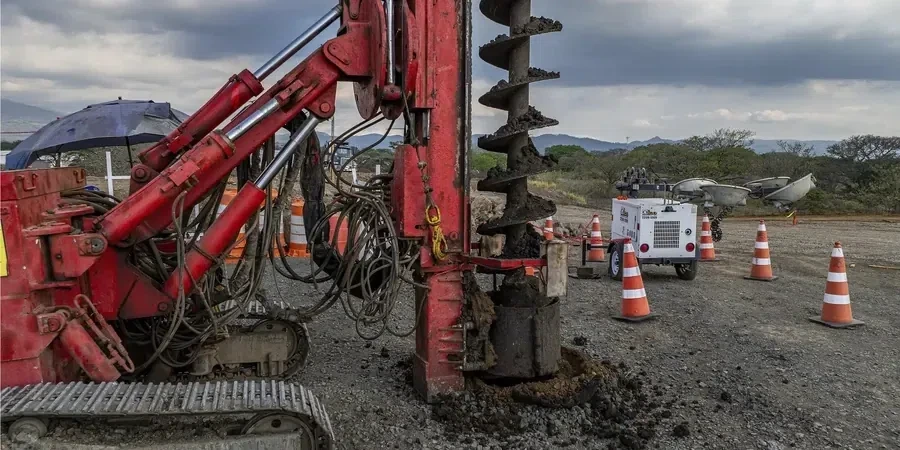
The vibroflot rig used for stone column installation on Murfreesboro jobsites is a crawler-mounted machine with a 20-ton pull-down capacity and a 360-degree rotating vibrator that reaches depths of 60 feet. The probe advances under its own weight plus water or air jetting, and the operator reads hydraulic pressure to gauge resistance at each lift. If the rig encounters an unexpected limestone pinnacle at 15 feet when the design assumed 25 feet of soft clay, the column depth is compromised — and the settlement calculation is no longer valid. That is the most frequent risk on the basin side of Murfreesboro, where karstic limestone topography creates abrupt rockhead variations over short distances. Without real-time monitoring of amperage and penetration rate during installation, a shortened column can pass visual inspection yet perform like an untreated zone. Our team logs every lift, recording depth, amperage, and stone volume to flag anomalies before the rig moves to the next point.
Q&A
What is the typical cost range for stone column design and installation on a Murfreesboro site?
For a building footprint requiring 80 to 200 linear feet of column, the combined design and construction cost generally runs between US$1,570 and US$4,640, depending on depth, column diameter, and accessibility for the vibroflot rig.
How does the limestone bedrock depth in Murfreesboro affect stone column design?
The shallow and irregular limestone surface on the eastern side of town can limit column depth. Columns must bear on competent rock, so we adjust the grid spacing and diameter to maintain the required area replacement ratio when treatment depth is constrained.
What verification tests confirm the stone columns are performing correctly?
Post-installation CPT soundings between columns measure the increase in tip resistance and sleeve friction. For critical structures, we also run a zone load test with settlement plates to verify the composite modulus directly.
What aggregate gradation is used for the columns and why does it matter?
We specify ASTM D448 Size No. 57 stone — a clean, angular aggregate with minimal fines. Good drainage prevents pore-pressure buildup during installation, and the angular shape provides high interlock for lateral load transfer into the surrounding soil.