← Home · Roadway

Rigid Pavement Design in Murfreesboro: AASHTO 1993 and PCA Method

Together, we solve the challenges of tomorrow.

EXPLORE →

Rigid pavement design in Murfreesboro must comply with AASHTO 1993 Guide for Design of Pavement Structures and the Portland Cement Association (PCA) method. The city's position on the eastern edge of the Central Basin, with its underlying Ordovician limestone, creates a unique subgrade environment. Karst features are common here. That means variable support conditions. A rigid slab bridges small soft spots. But larger voids demand investigation. Our team correlates ASTM D1586 SPT data with Westergaard edge-loading theory to determine the required slab thickness. For projects near the Stones River floodplain, where silty clays dominate, we often combine this with a CBR road analysis to calibrate the effective modulus of subgrade reaction. The goal is always a 30-year design life with minimal joint faulting.

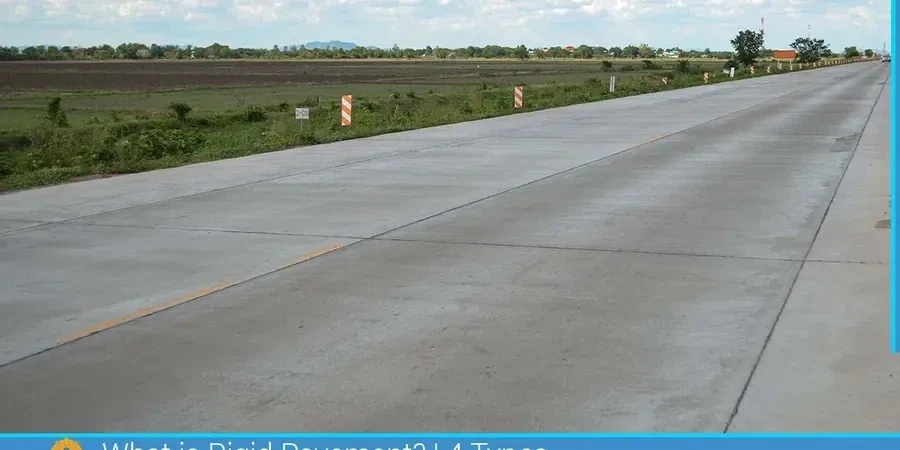
A properly designed rigid slab in Middle Tennessee's karst terrain bridges minor voids without structural distress, turning a geologic risk into a pavement asset.

Scope of work

Soil conditions shift dramatically across Murfreesboro. Near the geographic center around the Public Square, you encounter stiff, reddish clay residuum. This material offers decent k-values, often above 200 pci. But drive northwest toward the Blackman area, and the profile changes. Alluvial terraces there contain more moisture-sensitive silts. A rigid pavement design in Blackman will almost always require a thicker subbase. We specify a dense-graded aggregate interlayer to prevent pumping at the transverse joints. The design process uses the AASHTO 1993 equation, solving iteratively for slab thickness (D) based on the 18-kip ESAL forecast. For heavily loaded industrial access roads, we also verify the stress ratio using the PCA fatigue model. A complementary grain size analysis of the subgrade confirms the drainage coefficient (Cd) for the AASHTO equation. Every design package includes jointing plans, tie bar schedules, and dowel bar recommendations per ACI 325.12R.
Rigid Pavement Design in Murfreesboro: AASHTO 1993 and PCA Method
Technical reference image — Murfreesboro

Area-specific notes

A loaded concrete truck backs up to the slipform paver. The paver's vibrators consolidate the low-slump mix just ahead of the metering gate. This is the moment the design becomes reality. If the subgrade k-value was overestimated, edge stresses will crack the slab within the first five years. The biggest risk in Murfreesboro isn't traffic. It is moisture. The humid subtropical climate means about 53 inches of annual rainfall. Poor drainage saturates the subgrade. Fine-grained soils lose strength. Pumping begins. Erosion follows. That's why our designs always specify a positive drainage path. We model the pavement response using finite element analysis when the subgrade modulus varies by more than 20% across the project footprint. For expansive clay zones, we may recommend lime stabilization of the upper 12 inches before placing the subbase.

Need a geotechnical assessment?

Reply within 24h.

Email: contact@geotechnicalengineering.biz

Watch how it works


Technical parameters

ParameterTypical value
Design StandardAASHTO 1993 / PCA Method
Pavement TypesJPCP, JRCP, CRCP (interstate-grade)
Modulus of Rupture (MR)600-650 psi (typical TDOT spec)
Load Transfer Efficiency>75% via dowels at contraction joints
Subbase Requirement4-6 in dense-graded aggregate (TDOT 303)
Joint Spacing24x slab thickness (max 15 ft for JPCP)
Design Life Target30 years (interstates), 20 years (arterials)

Linked services


01

Subgrade k-Value Determination

We derive the modulus of subgrade reaction from plate load tests (ASTM D1196) or correlate it from CBR and triaxial data for your Murfreesboro site.

02

ESAL Forecasting

Traffic projections converted to 18-kip equivalent single axle loads. We account for truck growth rates on corridors like US-231.

03

Joint Layout and Detailing

Complete plan set showing transverse contraction joints, longitudinal joints, and construction joints. Dowel bar schedules included.

04

Life-Cycle Cost Analysis

Comparison of rigid vs. flexible alternatives using FHWA RealCost methodology. We show the net present value over a 40-year analysis period.

Standards used

AASHTO 1993 Guide for Design of Pavement Structures, PCA Manual (EB052P) - Thickness Design for Concrete Highways, ACI 325.12R - Guide for Design of Jointed Concrete Pavements, ASTM D1586-18 - Standard Test Method for SPT, TDOT Standard Specifications Section 501

Q&A


What is the cost range for rigid pavement design in Murfreesboro?

For a typical commercial lot or arterial road segment, the structural design fee ranges from US$1,910 to US$5,810. The final cost depends on the number of lanes, joint details required, and whether a geotechnical investigation must be included.

When is rigid pavement a better choice than flexible asphalt?

Concrete is better when you have slow-moving or standing truck traffic, such as at bus stops or industrial loading docks. It also works well on poor subgrades where you want the slab to bridge soft spots. In Murfreesboro's karst terrain, this bridging capability matters.

What subgrade tests are required before designing the slab?

We need the modulus of subgrade reaction (k-value). This comes from a plate load test or a CBR correlation. We also run a grain size analysis to classify the soil and determine the drainage coefficient. SPT borings tell us about deeper layers and potential voids.

How long does the design process take?

A standard design package, from receiving the geotechnical report to delivering stamped jointing plans, takes two to three weeks. Projects requiring traffic projections or finite element modeling may extend to four weeks.
Location and service area

We serve projects across Murfreesboro and its metropolitan area.

View larger map