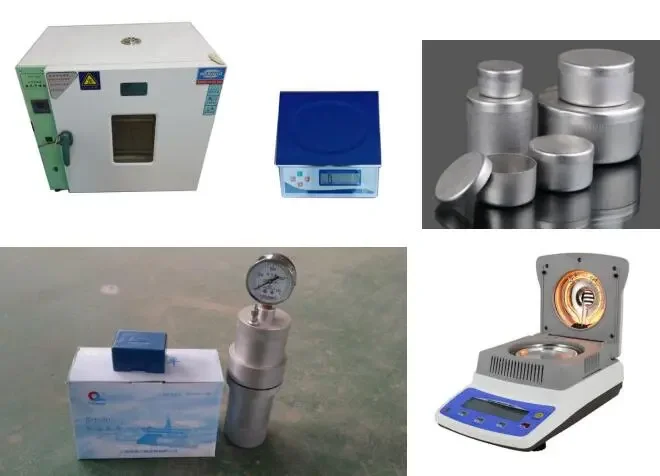
The soil under a warehouse pad off Joe B. Jackson Parkway tells a different story than the fill behind a retaining wall near the Stones River. In Murfreesboro, we see this contrast daily. The native clay in the western part of town compacts differently than the silty material closer to the West Fork. That’s why a field density test isn’t just a box to check. It’s a direct measure of whether the ground will hold up under load. We run these on building pads, utility trenches, and pavement subgrades across Rutherford County. Standard Proctor tests establish the lab maximum, and the sand cone gives us the in-place number to compare. When an earthwork contractor is moving fast, we keep pace. Our field crew gets the cone set, the sand flowing, and the numbers back to the superintendent before the next lift gets placed. In a city growing as fast as Murfreesboro, where new subdivisions and commercial sites break ground weekly, waiting on density results isn’t an option.
A sand cone test gives you one number that matters: percent compaction. In Murfreesboro’s clay, hitting 95% of modified Proctor is the difference between a stable slab and a cracked one.
Area-specific notes
Murfreesboro sits at roughly 620 feet elevation on the eastern edge of the Central Basin, where Ordovician limestone bedrock is mantled by residual clay that can swell and shrink with moisture changes. The last major seismic event that rattled this part of Tennessee was the 1811–1812 New Madrid sequence, but even moderate modern earthquakes can trigger differential settlement in poorly compacted fill. We see problems most often in transitional zones: where cut meets fill, around storm drain backfill, and under approach slabs for bridges. In these areas, a skipped density test or a false passing result can lead to costly repairs within two years. The sand cone method catches those weak spots because it measures a larger volume than a nuclear gauge—about three pounds of soil—so it’s less fooled by a single piece of chert or a localized dry pocket. When we find low density, the fix is immediate: rework the lift, adjust moisture, and retest. In Murfreesboro’s clay-rich subgrade, moisture control during compaction is everything.
Q&A
How much does a sand cone density test cost in Murfreesboro?
A single sand cone test with same-day report typically runs between US$110 and US$150, depending on site location within Rutherford County and the number of tests requested per mobilization.
How many sand cone tests do I need per lift?
Industry standard calls for one test per 2,500 square feet of compacted area per lift, or one test per 150 linear feet of trench. The project geotechnical report will specify the exact frequency. We always recommend more frequent testing in transition zones and around structures.
Can you test in rain or wet ground conditions?
We can test in light drizzle if the surface is protected, but standing water or saturated fill makes the test invalid. The sand must remain dry and free-flowing. We usually pause during heavy rain and resume once the surface moisture condition stabilizes.
What is the difference between a sand cone test and a nuclear density gauge?
The sand cone method (ASTM D1556) is a direct volumetric measurement using calibrated sand. It measures a larger soil volume and is considered more reliable in soils with variable particle sizes, like Murfreesboro’s chert-rich fill. It is also the referee method when nuclear gauge results are disputed or when the gauge cannot be calibrated for the specific soil type on site.
How quickly do I get results after a sand cone test?
Wet density is calculated on-site within minutes. If we run moisture content with a portable speedy moisture tester, we can give you percent compaction in about 15 minutes. Oven-dry moisture takes longer because the sample must be dried in the lab, but we typically provide the final report later the same day.