← Home · Laboratory

Laboratory CBR Test in Murfreesboro, TN – ASTM D1883

Together, we solve the challenges of tomorrow.

EXPLORE →

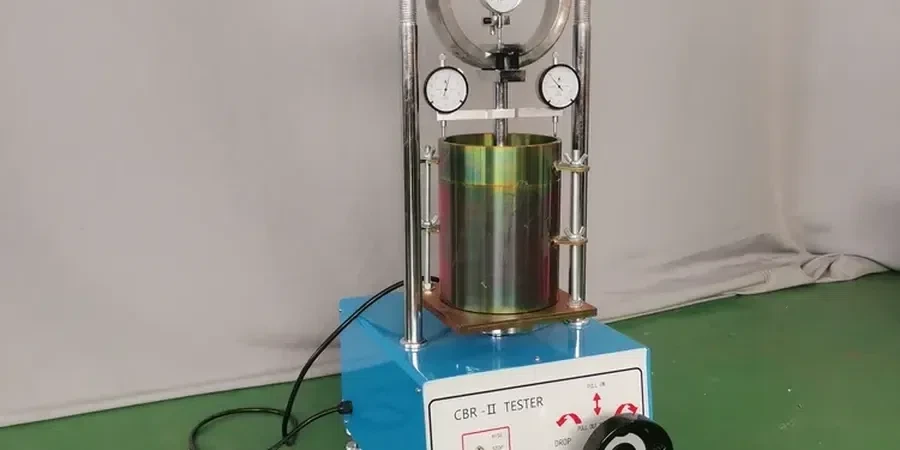
ASTM D1883 and AASHTO T-193 are the backbone of any defensible pavement design in Middle Tennessee, and they matter more in Murfreesboro than most realize. The city’s rapid residential and commercial growth along the I-24 corridor means new access roads and parking lots are being built on the clay-rich residuum of the Central Basin. A laboratory CBR test on a properly prepared remolded specimen gives engineers a direct measurement of subgrade bearing capacity—something empirical equations cannot replace. We run soaked CBR tests as standard because Murfreesboro’s average annual rainfall of 54 inches turns marginal clay into a support problem quickly. Before you commit to a final pavement section, pair these results with a CBR field test or verify the compaction characteristics through Proctor tests to ensure your lab data matches what the roller actually achieves on site.

A soaked CBR value is the single most cost-effective number you can get before designing a flexible pavement section in Middle Tennessee.

Scope of work

In Murfreesboro, we often see limestone residuum that looks firm during a dry August but loses over half its strength after a wet winter. The laboratory CBR test simulates that worst-case soaked condition by submerging the compacted specimen for 96 hours before penetration. A standard 0.1-inch penetration reading below 3 percent in a soaked test is a red flag—it means the subgrade needs chemical stabilization or a thicker aggregate base. Our lab compacts samples at standard Proctor energy (ASTM D698) and applies a 10-pound surcharge to mimic the overburden effect of a finished pavement structure. We measure swelling during soaking because even a half-inch of heave in an expansive clay can crack a rigid pavement. For projects near the Stones River floodplain, we also recommend exploring in-situ permeability testing—knowing how fast water moves through the subgrade explains why some soaked CBR values drop more than others in the same geologic unit.
Laboratory CBR Test in Murfreesboro, TN – ASTM D1883
Technical reference image — Murfreesboro

Area-specific notes

Murfreesboro sits on Ordovician-age limestone of the Nashville Group, weathered into a stiff silty clay cap that varies from 3 to 20 feet thick across the city. That clay contains enough montmorillonite to be moderately expansive—swell pressures can exceed 2,000 psf in laboratory tests. If a pavement design relies on a CBR value measured at optimum moisture without soaking, the subgrade will fail after the first extended rainy season. We have seen projects near the Gateway area where the as-built soaked CBR was 1.8 percent—less than half the unsoaked value. The risk multiplies in cut sections where the clay unit is exposed at formation level. A laboratory CBR test run under saturated conditions is not an academic exercise here; it is a insurance policy against premature fatigue cracking and rutting. Without it, the pavement structural number calculation is just a guess.

Need a geotechnical assessment?

Reply within 24h.

Email: contact@geotechnicalengineering.biz

Technical parameters


ParameterTypical value
Test standardASTM D1883 / AASHTO T-193
Specimen preparationStandard Proctor (ASTM D698) compaction
Soaking period96 hours submerged (4 days)
Surcharge weight10 lb minimum (simulates pavement overburden)
Penetration rate0.05 in/min
Penetration readings0.1 in and 0.2 in (corrected values reported)
Swell measurementRecorded during soaking (dial gauge)
Report formatLoad-penetration curve, CBR at each point, swell %

Linked services

01

Soaked Laboratory CBR (ASTM D1883)

The standard test for pavement design. Specimen compacted at optimum moisture, soaked 96 hours, load-penetration curve provided. CBR reported at 0.1 in and 0.2 in penetration.

02

Unsoaked CBR for Immediate Use

Run on compacted specimens without soaking for a quick comparison or for projects where the water table is permanently deep and the subgrade is protected from infiltration.

03

CBR with Swell Potential Package

Combines the soaked CBR test with a free-swell test and Atterberg limits. Quantifies heave risk for rigid pavements and shallow foundations on Murfreesboro's expansive clay residuum.

Standards used


ASTM D1883, AASHTO T-193, ASTM D698, TDOT Standard Specifications for Road and Bridge Construction

Q&A

How much does a laboratory CBR test cost in Murfreesboro?

A single-point soaked CBR test per ASTM D1883 typically runs between US$130 and US$180, depending on whether you need one or three points and if swell measurement is included. Most pavement designs require a three-point curve, so we quote per project once we know the number of samples.

How long does the soaked CBR test take?

Four days minimum. The specimen is compacted and then submerged for 96 hours. After soaking, we run the penetration test and prepare the report the same day. If the unsoaked value is also required, add one extra day for the initial compaction and testing.

What CBR value is considered acceptable for a flexible pavement subgrade?

For local roads and parking lots in Tennessee, TDOT typically wants a soaked CBR of 3 percent or higher. Below that, you need chemical stabilization, geogrid, or a thicker aggregate base. Values above 10 percent are excellent and allow a thinner pavement section.

Can you test samples taken from a job site in Murfreesboro?

Yes. We provide bulk sample bags and instructions for disturbed sampling. You deliver the material to our lab, and we prepare remolded specimens at the target moisture and density. For undisturbed samples, Shelby tubes can be tested but remolded CBR is the standard method for pavement evaluation.
Location and service area

We serve projects across Murfreesboro and its metropolitan area.

View larger map