← Home · Slopes & Walls

Active and Passive Anchor Design for Murfreesboro Soil Profiles

Together, we solve the challenges of tomorrow.

EXPLORE →

A common misstep in Murfreesboro excavation projects is treating anchor bond zones as uniform when the subsurface is anything but. The local geology, shaped by the Ordovician Ridley and Lebanon limestone formations, produces a residual soil profile where stiff red clay transitions abruptly into weathered rock at depths that can vary by 15 feet across a single city block. Contractors who skip site-specific anchor testing often end up with tendons that creep under service loads, especially where slickensided clay seams reduce the interface friction by half. The anchor design process here demands more than a textbook free-body diagram; it requires a working understanding of how groundwater perched within the epikarst zone pressurizes the bond length after heavy rain, and how in-situ permeability data can identify those zones before grouting. A well-calibrated design also draws on triaxial testing results to model the drained strength parameters that govern long-term anchor performance in overconsolidated clays.

Anchor capacity in Murfreesboro residuum is rarely governed by the steel tendon; it is the soil-grout interface within weathered limestone that dictates the design.

Scope of work

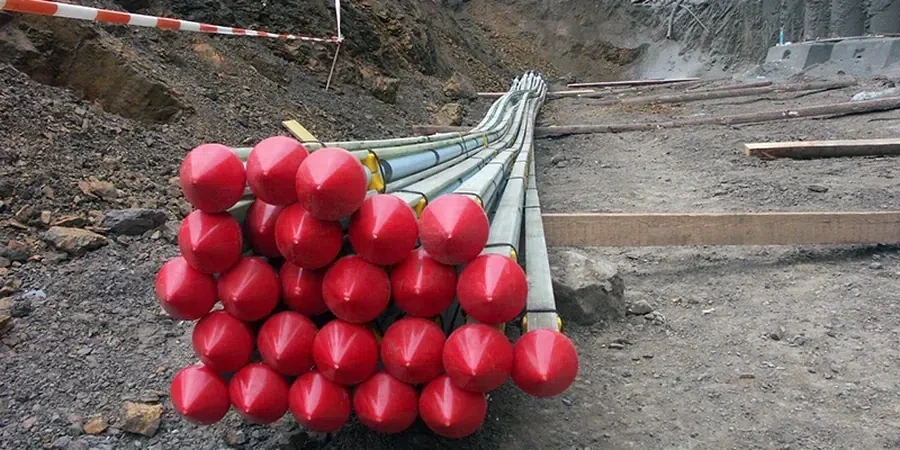
A recent excavation on Medical Center Parkway illustrated the point. The site called for a 28-foot cut adjacent to an existing stormwater detention basin, with the lower 10 feet bearing directly on pinnacled bedrock. The design team specified a single row of active tieback anchors drilled at 15 degrees, socketed a minimum of 12 feet into competent limestone. What made the installation challenging was the variable depth to rock; the eastern half of the wall required 45-foot anchors while the western corner reached refusal at 31 feet. The anchor design incorporated a double-corrosion protection system using corrugated HDPE sheathing and factory-filled epoxy, a requirement driven by the mildly acidic groundwater common to the Stones River watershed. Tendon stressing followed the PTI DC35.1 procedures, with each anchor proof-tested to 133% of design load and a lift-off test performed on every tenth tendon. Lock-off loads accounted for the anticipated long-term relaxation of the clay bond zone, calculated using the soil parameters confirmed by laboratory consolidation and drained direct shear tests on Shelby tube samples. For cuts deeper than 25 feet in similar ground, the anchor design often integrates a slope stability back-analysis to confirm the global factor of safety against a deep-seated failure surface passing behind the bonded length.
Active and Passive Anchor Design for Murfreesboro Soil Profiles
Technical reference image — Murfreesboro

Area-specific notes

In Rutherford County, one of the most underappreciated risks is anchor lock-off loss caused by thermal cycling in the unbonded length before the permanent facing is cast. During a late-fall installation on a Murfreesboro commercial site, the contractor recorded a 9% load drop across a weekend cold front, a shift large enough to compromise the preload on a soldier pile wall. The anchor design mitigated this by specifying a lock-off sequence that compensated for the temperature differential between the steel tendon and the surrounding ground. Another local concern involves anchor interference with karst voids; a passive anchor drilled near a known sinkhole feature on Thompson Lane lost grout into a solution cavity, requiring the hole to be flushed and re-grouted with a thixotropic mix. The design now routinely includes a pre-production anchor testing program and a probe hole ahead of each production anchor when the site lies within the mapped karst probability zone defined by the Tennessee Geological Survey.

Need a geotechnical assessment?

Reply within 24h.

Email: contact@geotechnicalengineering.biz

Technical parameters


ParameterTypical value
Design standardPTI DC35.1-14, FHWA GEC No. 4
Anchor typesActive (prestressed) tiebacks, passive soil nails
Typical bond stress (residual clay)12–28 psi (0.08–0.19 MPa)
Typical bond stress (limestone)55–110 psi (0.38–0.76 MPa)
Corrosion protection gradeClass I (double barrier) or Class II per PTI
Proof test load133% of design load (active anchors)
Creep test duration60 minutes at lock-off load
Minimum unbonded length15 ft or 20% of tendon length

Linked services

01

Tieback Anchor Design

Full design of active prestressed anchors for soldier pile and secant pile walls, including bond length calculation, tendon sizing, and lock-off load specification per PTI DC35.1.

02

Passive Anchor (Soil Nail) Systems

Design of passive inclusions for top-down excavation support in stiff residual clays, with pullout capacity verified through field testing.

03

Anchor Load Testing and Verification

Performance, proof, and extended creep tests executed with calibrated hydraulic jacks and digital load cells, documenting load-displacement behavior.

04

Corrosion Protection Engineering

Specification of encapsulation systems for aggressive groundwater environments, including epoxy-coated strand, corrugated sheathing, and post-grouting details.

Standards used


PTI DC35.1-14: Recommendations for Prestressed Rock and Soil Anchors, FHWA Geotechnical Engineering Circular No. 4: Ground Anchors and Anchored Systems, ASTM A416/A416M: Standard Specification for Low-Relaxation, Seven-Wire Steel Strand for Prestressed Concrete, IBC 2021 Chapter 18: Soils and Foundations, OSHA 1926 Subpart P: Excavations

Q&A

How much does anchor design and testing cost for a typical Murfreesboro retaining wall?

For a project with 20 to 40 anchors, the combined design, submittal preparation, and field testing program typically ranges from US$970 to US$3,520, depending on the number of verification tests required and the complexity of the corrosion protection system specified.

What is the difference between active and passive anchors?

Active anchors are prestressed after installation to apply a known force to the structure before any soil movement occurs; passive anchors develop their force only as the ground deforms. In Murfreesboro excavations deeper than 15 feet, active tiebacks are generally preferred because they limit lateral wall deflection to under 1 inch, which protects adjacent utilities and pavements.

How long do ground anchors last in Middle Tennessee soils?

With proper corrosion protection, a Class I anchor system can have a design life exceeding 75 years. The primary threat in this region is not uniform corrosion but pitting attack where acidic groundwater contacts exposed steel in imperfectly grouted zones, which is why the design emphasizes centralized tendon placement and post-grouting of the bond length under pressure.

What site investigation data is needed before anchor design begins?

The minimum dataset includes SPT N-values and recovery ratios through the bond zone, unconfined compression tests on rock core, drained direct shear tests on undisturbed clay samples, and groundwater pH and resistivity measurements. Where the bond zone is in weathered limestone, a downhole camera survey of at least one borehole is recommended to identify open joints or cavities that could cause grout loss during installation.
Location and service area

We serve projects across Murfreesboro and its metropolitan area.

View larger map