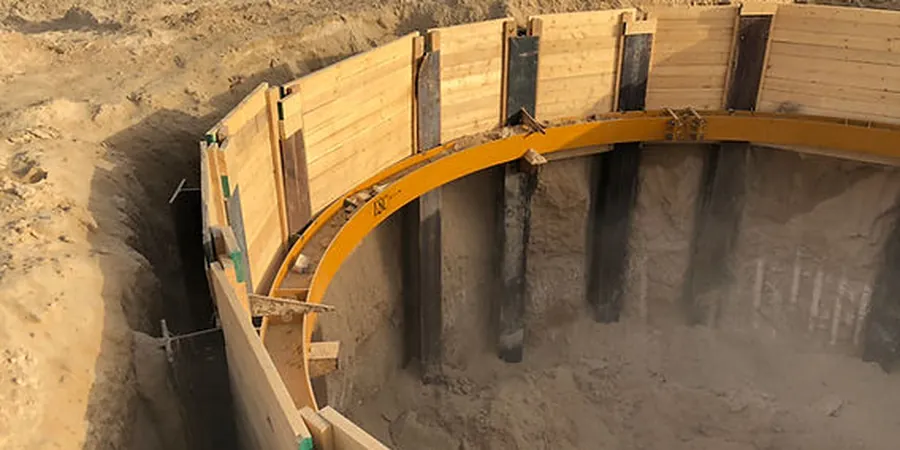
Foundation design in Murfreesboro, Tennessee, requires a thorough understanding of the region's unique subsurface conditions, which are dominated by the Ordovician-age limestone of the Nashville Basin, often interbedded with clay-rich residuum and localized chert fragments. The design and construction of shallow and deep foundations must account for the variability of these weathered rock profiles and the potential for expansive clay layers, as outlined by the 2018 International Building Code (IBC) as adopted by the City of Murfreesboro. A comprehensive geotechnical investigation is the critical first step, providing the data needed to mitigate risks associated with differential settlement and bearing capacity failures. This process is further refined by our advanced laboratory testing, which quantifies the engineering properties of the soils and rock encountered on site.
Our foundation analysis methodology is strictly governed by standards set by the American Society of Civil Engineers (ASCE) and the American Society for Testing and Materials (ASTM). For deep foundation systems like driven piles or drilled shafts, we correlate in-situ test data, most notably from cone penetration test (CPT) soundings, with empirical methods to estimate unit side friction and end bearing in the local limestone and clay formations. Shallow foundation design is supported by precise In-Situ to determine the allowable bearing pressure and elastic settlement, ensuring compliance with the presumptive load-bearing values or site-specific calculations required by the Murfreesboro building code. These field methods are complemented by index property tests, including Atterberg limits, to evaluate the shrink-swell potential of the fat clays commonly found in the region's valleys.
Typical projects in Murfreesboro, from the multi-story student housing near Middle Tennessee State University to commercial developments along the Medical Center Parkway, present distinct geotechnical challenges. The presence of deep, stiff clay overlying pinnacled bedrock often dictates a transition from spread footings to a deep foundation system to bypass the zone of seasonal moisture fluctuation. For infrastructure and pavement projects, rigorous field density testing using the sand cone method is essential during the construction of engineered fills, ensuring that compaction meets the specified percentage of the maximum dry density per ASTM D698. A complete understanding of the soil profile, including a detailed grain size analysis using sieve and hydrometer, is indispensable for predicting drainage characteristics and long-term performance of the foundation system.
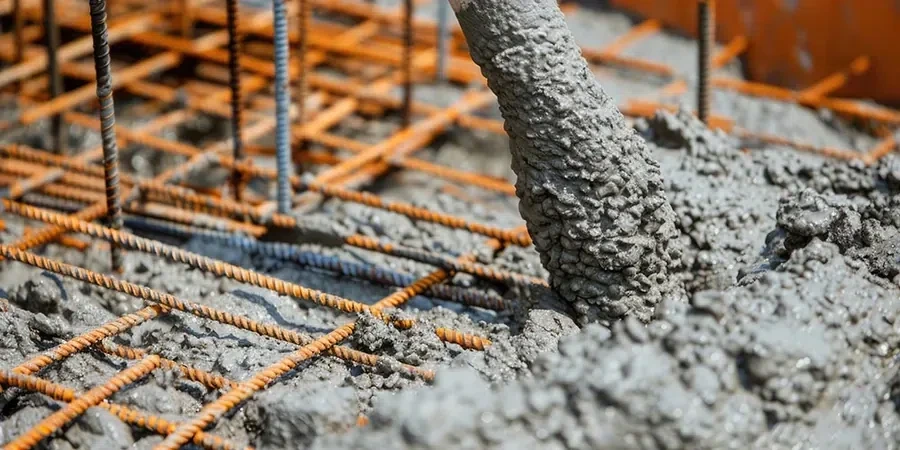
Our process begins with an exploratory boring program to log the stratigraphy and retrieve representative samples, followed by a targeted laboratory testing regimen. The final deliverables include a geotechnical report with specific foundation recommendations, encompassing bearing capacities, anticipated total and differential settlements, lateral earth pressures for basement walls, and clear construction specifications for subgrade preparation. By integrating local geological knowledge with a rigorous, data-driven approach, we provide a defensible design that reduces construction uncertainty and ensures the long-term serviceability of your structure, effectively managing the inherent subsurface risks in Rutherford County.