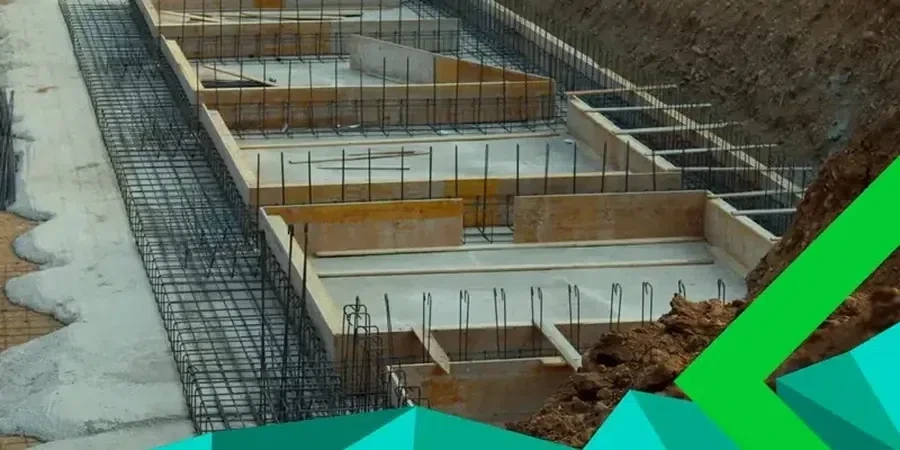
IBC Chapter 18 and ASCE 7-22 Section 12.13 govern shallow foundation design in Tennessee. In Murfreesboro, the real challenge isn't the code text—it's the ground beneath it. The city sits on Ordovician limestone of the Stones River Group, riddled with solution channels and clay-filled cutters. We see this in the lab every week: soil samples from sites near the West Fork Stones River where stiff lean clay overlies pinnacled rock at depths of 4 to 12 feet. A standard SPT blow count of 8 in that upper clay can jump to refusal 2 feet lower. Presumptive bearing values from IBC Table 1806.2 become meaningless under those conditions. That's why our team ties every footing design to site-specific shear strength data from triaxial testing and consolidation curves, never to a textbook table. Murfreesboro requires that level of rigor.
Presumptive bearing values from a code table don't work when your footing spans a clay-filled cutter 18 inches deep.
Scope of work
The Shelby tube is the workhorse for shallow foundation sampling in Murfreesboro. Our crews push 3-inch OD thin-wall tubes with a hydraulic ram mounted on a CME-75 drill rig. The target is the clay stratum at 2.5 to 3 times the proposed footing width, typically 8 to 14 feet below grade. Each tube yields a 24-inch undisturbed sample that goes straight into wax-sealed cardboard liners and a chilled cooler. Back at the Rutherford County lab, we extrude the sample within 24 hours. The trim station is set up for 2.5-inch diameter triaxial specimens and 2.5-inch consolidometer rings. We log every inch—fissures, iron staining, calcite stringers—before the specimen ever sees a load frame. That visual log correlates directly with the boring log the geologist called in the field, closing the loop between field observation and lab measurement.
Q&A
What is the typical cost for a shallow foundation design report in Murfreesboro?
For a single residential or light commercial lot with one to two borings and the associated triaxial and consolidation testing, the report package typically falls between US$2,140 and US$3,310. The final number depends on the number of Shelby tube samples recovered and whether consolidation tests run at one or multiple stress increments.
How far below the footing do you need to sample?
We follow the common rule of thumb: sample to a depth of at least 2 times the footing width below the bearing elevation, but no less than 10 feet in the residual clays we see in Rutherford County. If rock is encountered shallower, we core 5 feet into competent limestone to rule out a boulder or a thin cap over a clay-filled void.
Can you use SPT data alone for bearing capacity in Murfreesboro?
We do not recommend it. SPT blow counts in stiff fissured clay can be misleading—a cobble or limestone chip can spike the N-value artificially. IBC allows correlation-based methods, but in a karst environment the risk of mischaracterization is too high. Undisturbed sampling and lab strength testing provide the defensible data a building official will accept.